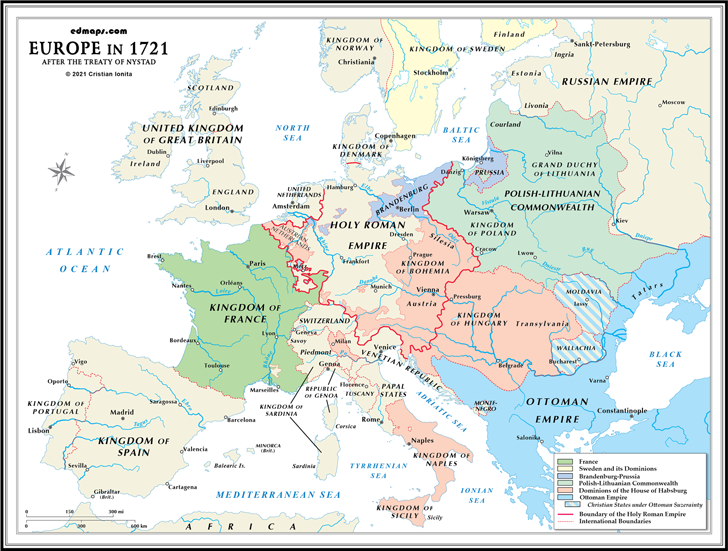
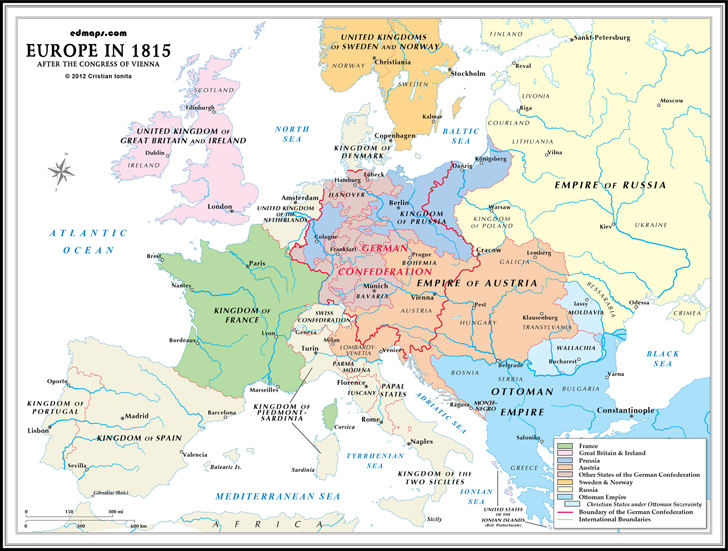
In 1871, the German Empire emerged through Prussian-led unification following victory in the Franco-Prussian War, creating Europe's most powerful continental state through the integration of previously fragmented German territories.
The German Empire encompassed 25 constituent states covering approximately 540,000 square kilometers with 41 million inhabitants. The new empire included the former German Confederation states plus Alsace-Lorraine, annexed from France as the Reichsland. This territorial configuration united German-speaking populations under Prussian leadership while establishing German dominance in Central Europe.
The empire operated as a federal monarchy with Kaiser Wilhelm I as emperor and Otto von Bismarck as chancellor. The constitution balanced Prussian hegemony with state rights through the Bundesrat (Federal Council), where Prussia held 17 of 58 votes, ensuring effective control while maintaining federal appearance. The Reichstag served as the elected lower house, though its powers remained limited compared to state governments.
Four kingdoms retained significant autonomy: Prussia dominated with approximately 60% of the empire's territory and population, controlling northeastern Germany, the Rhineland, and Westphalia. Bavaria maintained its own postal system, railways, and military during peacetime. Württemberg and Saxony preserved limited sovereignty while integrating into the imperial framework.
Numerous smaller entities maintained nominal independence: six grand duchies (Baden, Hesse, Mecklenburg-Schwerin, Mecklenburg-Strelitz, Oldenburg, Saxe-Weimar-Eisenach), five duchies, seven principalities, and three free cities (Hamburg, Bremen, Lübeck). These states retained local administration while subordinating foreign policy and military affairs to imperial authority.
Despite federalism, Prussia's dominance ensured centralized policies in crucial areas: unified currency, postal system, military organization, and customs. The empire standardized legal codes, established imperial courts, and created a common citizenship while respecting regional variations in local governance.
Unification sparked further territorial ambitions, including pan-German desires for Austrian inclusion and colonial expansion, setting the stage for future European conflicts.